


The Priestianni Law: FIFA World Cup 2026 & everything to know about the IFAB rule
Piero Hincapie is the latest player sent off for covering his mouth at the 2026 World Cup. Here is what the Prestianni Law is and why it exists.


Piero Hincapie became the latest player to be sent off at this World Cup for covering his mouth during a confrontation on the pitch. The Ecuador defender did it in the dying minutes of his country's 2-0 defeat to Mexico in the Round of 32 on Wednesday morning, and referee Slavko Vincic had no hesitation.
One check with VAR, and the Arsenal full back was walking down the tunnel with a straight red card. Ecuador were already out of the tournament, but the image was familiar. It has now happened twice at this World Cup, and both times the rule enforced was the same one. This is the Prestianni Law, named after Benfica forward Gianluca Prestianni.
Back in February, 2026, Real Madrid played Benfica in Lisbon in the first leg of the Champions League play-off round. Around the 50-minute mark, Vinicius Jr scored and celebrated in front of the home fans.
Prestianni walked over and, while covering his mouth with his shirt, said something to him. Vinicius turned away visibly upset and went straight to referee Clement Turpin.
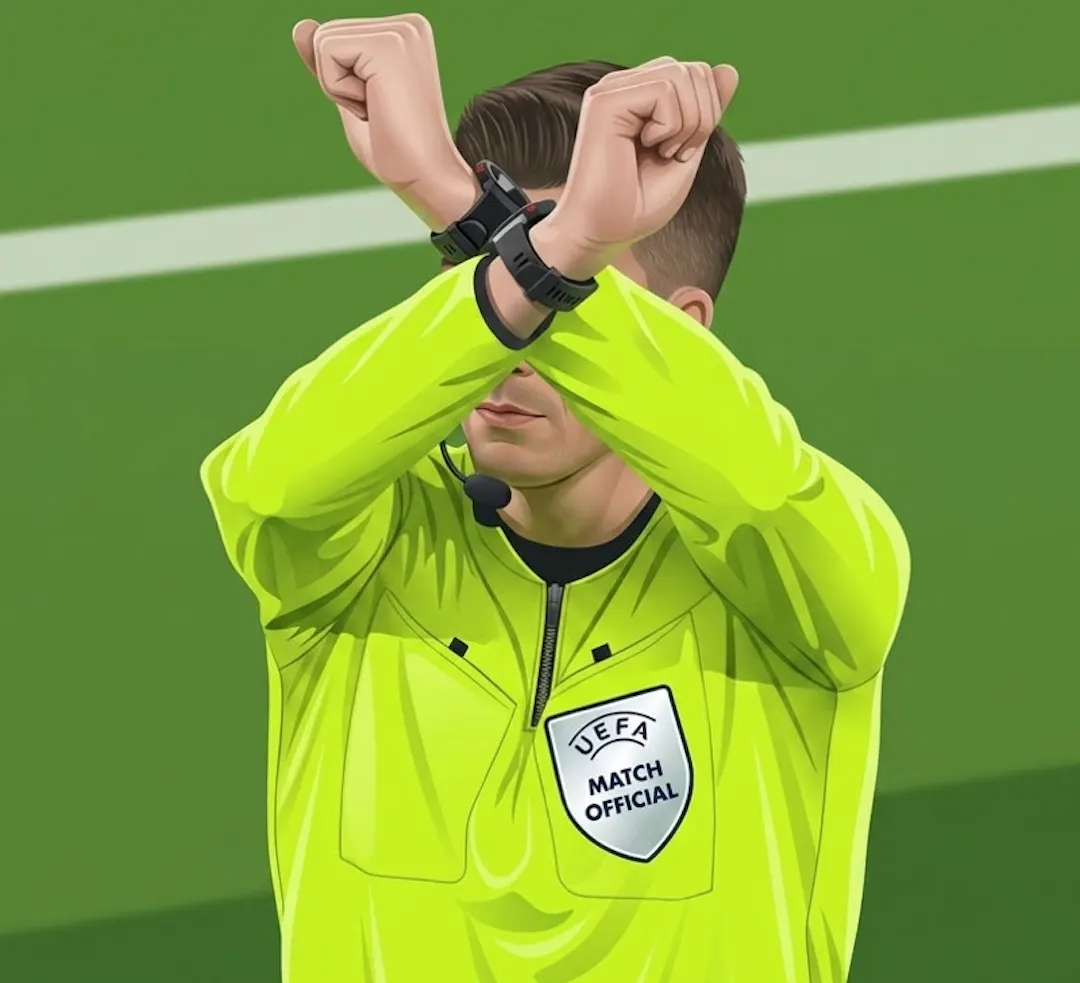
The French referee raised his arms in a crossed gesture, which is the on-field signal that a racism allegation has been made. Play stopped for 10 minutes.
Vinicius told reporters after the game that Prestianni had directed a racial slur at him. Prestianni denied it. The problem for investigators was that Prestianni had covered his mouth, so there was no usable footage of what he actually said and lip-reading was impossible.
RELATED POST

UEFA handed Prestianni a six-match ban in April, finding his conduct to be homophobic rather than racist. Three of those matches were suspended for two years, so he served two additional games beyond the one provisional suspension already completed.
Whether the comment was racist, homophobic or something else, the mouth-covering was what made it impossible to address in real time. Referee Turpin could not act during the match because there was no evidence.
FIFA president Gianni Infantino responded.
“If a player covers his mouth and says something, and this has a racist consequence, then he has to be sent off. There must be a presumption that he has said something he shouldn't have said, otherwise he wouldn't have had to cover his mouth,” he reacted.
How the rule became law
The body that writes football's rules is the International Football Association Board, or IFAB. It includes FIFA and the four British football associations. FIFA brought the mouth-covering idea to IFAB's annual general meeting in Wales in February 2026, days after the Prestianni incident.
Mark Bullingham, the English FA chief executive, said publicly there was a desire to move quickly but that the board wanted to protect normal private conversations between players from being caught by the rule.
IFAB held a special meeting in Vancouver, Canada at the end of April and unanimously approved FIFA's proposal. From that point the rule was set for the World Cup.
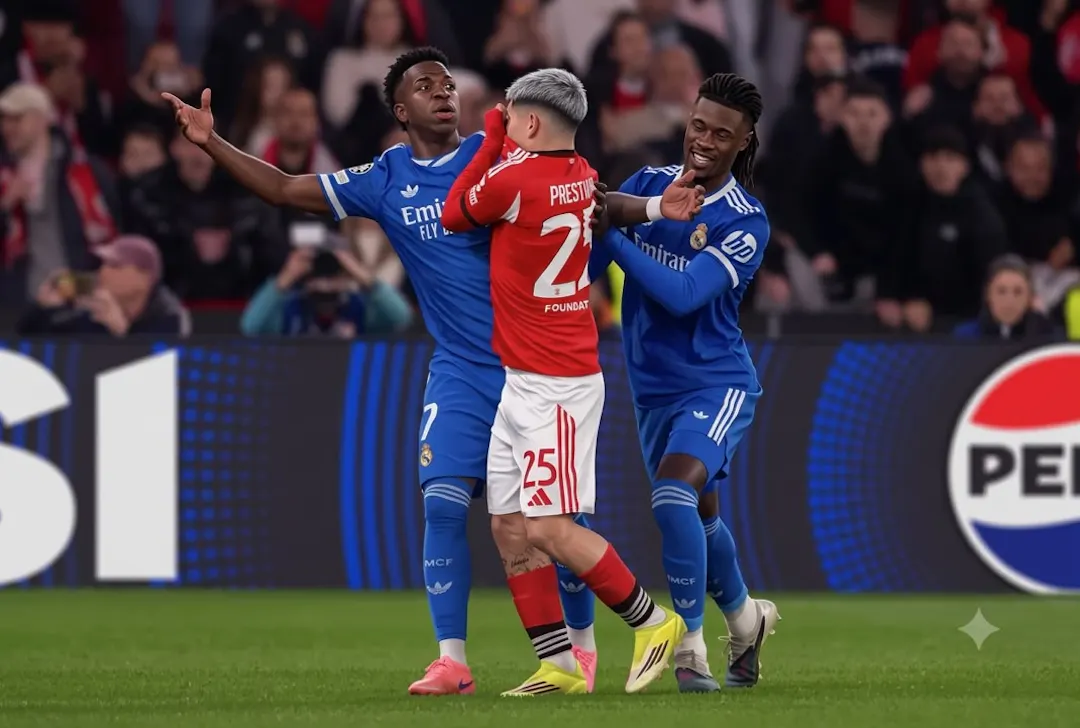
Any player who covers their mouth with their hand, shirt, or anything else while confronting an opponent or a referee can be sent off. There is no yellow card warning. The referee issues a straight red and VAR is available to confirm. The key word is confrontation.
IFAB carved out an exception for private conversations between teammates or with coaches, because the rule was not designed for that. A heated exchange between opponents is a different matter entirely.
That distinction has already caused confusion at this tournament. England's Jude Bellingham covered his mouth while speaking to Ghana's Jordan Ayew during one match and the clip spread online with many viewers unsure whether a red card was coming. No card was shown because the referee judged the conversation as non-confrontational.
It shows how much the referee's judgement in the moment still counts.
Miguel Almiron was the first player sent off under the rule at any World Cup, on June 19 in Paraguay's Group D match against Turkiye in Santa Clara. After a foul near midfield in first-half stoppage time, Almiron and Turkiye right-back Mert Mulder exchanged words.
The Former Newcastle player covered his mouth while speaking, Mulder immediately appealed to referee Ivan Barton, and Barton went to VAR before showing red. Paraguay's coach Gustavo Alfaro confirmed after the game that his squad had known about the rule before the tournament. England's Dan Burn, who played alongside Almiron at Newcastle, told reporters it looked like habit rather than malice.
“It's going to take a little while for some players to get used to that,” he said.
Paraguay finished with ten men and still beat Turkiye 1-0 to advance from the group.
Hincapie's red card today had a different flavour. Ecuador were already losing 2-0 and heading out. In the dying minutes, Hincapie got into a verbal exchange with Mexico's Santiago Gimenez, covered his mouth while speaking, and Gimenez immediately pointed it out to Vincic.
The referee checked VAR and showed red. The dismissal had no effect on the tie, but it has added to the debate about whether the punishment fits the situation.
Paraguay's Alfaro raised that concern after Almiron's red card. “The fear I have is that football loses its essence,” he said. “In football there's frictions, fights, clashes.”
The idea is that if a player covers their mouth in a tense confrontation with an opponent, there is no innocent explanation for why they need to hide what they are saying. Whether the sport adjusts soon enough, or whether more players end up walking off before the tournament is done, remains to be seen.
Comments (0)
Latest Posts

Eberechi Eze Stats and Biography: Progress or Regression?

Manchester City 115 Charges Ruling: 3 Reasons They May Not Be Punished As You Expect

The Complete Midfielder - Who Is the Best Right Now?

Lamine Yamal vs Raphinha: Who Is the Better Player at Barcelona?

Goals, Trophies and Loyalty: Inside the World of Lionel Messi

FIFA World Cup 2026 Prize Money: How Much Spain, Every Team, and Player Won
🔥 Most Read
More from this Author

Lamine Yamal Childhood in the Spotlight: Inside a Modern Prodigy’s Rise

AFCON 2027 Qualifiers: Diomande, Ghana and 5 Reasons You Should Watch This Year’s Edition

Max Dowman, England and the price of being ready too early

Never Change a Winning Team: Arsenal, Arteta and a Lesson Relearned the Hard Way

Alidu Seidu, Nice and the Joker Rule: How Ligue 1 Lets Clubs Sign Players After the Window Closes

