


PSG, Ligue 1 and the Rest Advantage: How France’s System Helps Champions League Success
Ligue 1 has postponed PSG fixtures before Champions League knockout ties twice this season alone. Here is how that privilege works, why it matters, and how much it has contributed to PSG winning back-to-back European titles.


Paris Saint-Germain confirmed this week that Ousmane Dembélé would be given a planned rest period, with the club saying the French international would rejoin the full group for training on Monday. Looking at it, it was just any other announcement. But what it repeated is something the rest of European football has been watching for about two years now.
On April 11 this year, Liverpool hosted Fulham in a Premier League match with real consequences for their top-four race. Three days later, they had to face PSG at Anfield in the second leg of a Champions League quarterfinal, a game the English side lost. PSG, meanwhile, spent that weekend doing nothing. As BBC Sport reported, the LFP, French football’s governing body, had postponed their Ligue 1 title clash with Lens from April 11 to May 13, handing the European champions a full six days of rest and preparation between the two legs.
It was not a one-off. In February, the LFP postponed PSG’s home game against Nantes, which fell between the two legs of their last-16 tie with Chelsea. Earlier in the season, Nice’s fixture against PSG was rescheduled to allow the club to prepare for a European away leg.
At least two times in the same campaign, Ligue 1 moved its own fixtures to clear PSG’s calendar. The pattern is deliberate. Ligue 1 cut its number of clubs from 20 to 18 in 2023-24. The LFP cited several reasons, including reducing dead-rubber matches and improving competition quality.
One of the central arguments was reducing fixture congestion, specifically for clubs competing in Europe. Fewer teams means more gaps in the calendar, which makes postponements logistically possible where they would otherwise cause a pile-up of rearranged matches.
The league did that deliberately, and PSG are the primary beneficiary because they are the only French club that consistently reaches the Champions League knockouts.
The LFP’s justification for granting postponement requests is France’s UEFA coefficient. This is a ranking that determines how many clubs each country sends into the Champions League. France currently holds five spots in European competition across the three UEFA club tournaments, with four of those spots qualifying automatically. A deeper PSG run in the Champions League generates more coefficient points for French football, which benefits every Ligue 1 club indirectly by increasing the number of European places available.
The LFP frames its scheduling decisions as a collective investment. Lens, who formally protested the April 11 postponement in a public statement, called it a league subordinating its own competition to the demands of its most powerful member.
What the Stats Say About PSG
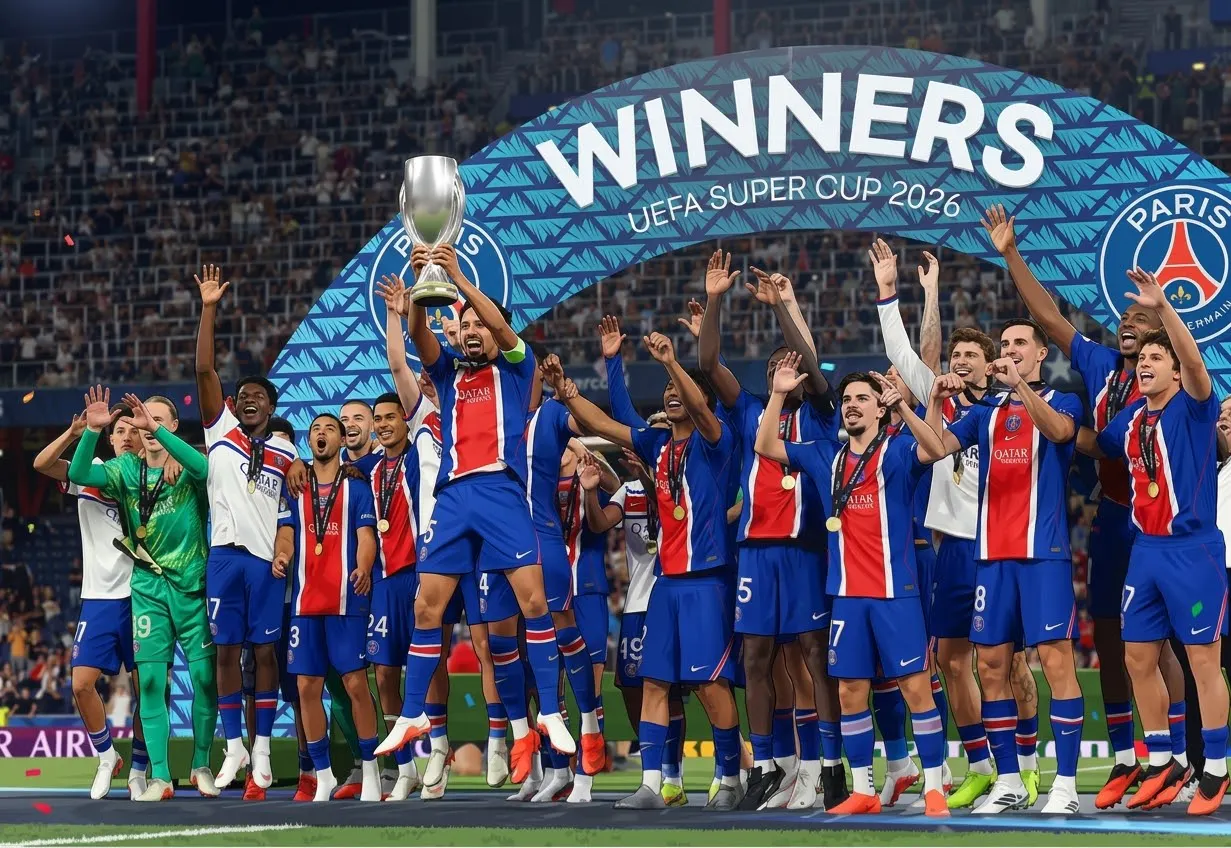
PSG played 65 games in 2024-25, including the Club World Cup, which cut into their pre-season. By the time the Champions League final arrived in Budapest, Luis Enrique’s side had already played 60 competitive matches. None of their opponents in the knockout rounds had managed their domestic calendar with the same flexibility. Arsenal, who lost to PSG in the final on penalties, played a Premier League game four days before the second leg of the semifinal and another three days before the final itself. PSG had used the preceding weekend for a light Ligue 1 fixture they rested eight starters in. That is the difference between having a system that accommodates elite European ambition and having one that does not.
Since the start of 2025, per Supersport, no club in Europe’s top five leagues has won more games across all competitions than PSG. That covers the Premier League, La Liga, Serie A, the Bundesliga, and Ligue 1. It is not because PSG have a bigger squad than Real Madrid or a more expensive one than Manchester City. It is partly because their calendar is managed with an intentionality that no other league currently matches. Enrique has been open about it. He rotates a lot in Ligue 1 and uses domestic fixtures to give minutes to players who need game time without risking stars before European nights.
Ligue 1 becomes, in his system, a training ground with points attached.
Does Resting Players Win Trophies?
Rest alone does not win trophies. PSG have Desire Doue, Joao Neves, Vitinha, and Kvaratskhelia. They have a manager in Enrique who built two Champions League-winning squads from scratch without a dominant number nine, which is a tactical achievement that has nothing to do with scheduling. The back-to-back titles are a product of genuine quality, depth, and a very specific pressing system that works because every player understands their role well.
But at the margins of elite competition, where a quarterfinal second leg is largely decided by which team’s legs are fresher in the last 15 minutes, preparation windows close the gap between equal teams.
PSG had six days before the Anfield decider. Liverpool had three. Neither side is definitively better than the other at full strength. The rest advantage gave PSG the best possible version of themselves at the moment it mattered most. In a knockout tournament decided over two legs, that is not a small thing.
WHAT YOU SHOULD READ NEXT

Is Javier Tebas right about the gap between La Liga and the Premier League?
Javier Tebas says England and Spain live in different football realities. A closer look at the money, choices and consequences behind the Premier League and La Liga divide.

Africa's record ten World Cup teams and the Italy elimination that answered Gattuso's controversial argument
Gennaro Gattuso said African teams didn't deserve their expanded World Cup slots. On the same night Italy were eliminated by Bosnia, DR Congo secured Africa's tenth spot in history. The qualification numbers tell the real story.

Pep Guardiola vs Sir Alex Ferguson: Football's greatest managers compared
Trophies, records, legacy, players developed. A full breakdown of where Pep Guardiola and Sir Alex Ferguson stand in the argument for the greatest football manager of all time.

Venezia FC in Serie A: Drake, €100m war chest, and a point to prove
Venezia FC are back in Serie A after winning the Serie B title with 82 points. With Drake, Tim Leiweke and a €22m record signing already in, the Winged Lions are not here just to survive.
Comments (0)
Latest Posts

Eberechi Eze Stats and Biography: Progress or Regression?

Manchester City 115 Charges Ruling: 3 Reasons They May Not Be Punished As You Expect

The Complete Midfielder - Who Is the Best Right Now?

Lamine Yamal vs Raphinha: Who Is the Better Player at Barcelona?

Goals, Trophies and Loyalty: Inside the World of Lionel Messi

FIFA World Cup 2026 Prize Money: How Much Spain, Every Team, and Player Won
🔥 Most Read
More from this Author

Lamine Yamal Childhood in the Spotlight: Inside a Modern Prodigy’s Rise

AFCON 2027 Qualifiers: Diomande, Ghana and 5 Reasons You Should Watch This Year’s Edition

Max Dowman, England and the price of being ready too early

Never Change a Winning Team: Arsenal, Arteta and a Lesson Relearned the Hard Way

Alidu Seidu, Nice and the Joker Rule: How Ligue 1 Lets Clubs Sign Players After the Window Closes

