


Tapping Up, Transfer Leaks and Bruno Guimaraes: Why the Premier League's Rules Are Being Ignored
Premier League Rules T.5 and T.6 ban clubs and agents from approaching contracted players. Recent transfer saga shows why those rules need teeth. Here is how tapping up actually works, and why nobody gets punished.


Bruno Guimaraes has told Newcastle United he wants to leave. Arsenal have not made any formal contact with Newcastle. What Arsenal have done, according to ESPN, is explore the conditions of a deal through intermediaries, with the fee and personal terms already being discussed in the background.
Newcastle, who lost Alexander Isak to Liverpool last year, then Anthony Gordon to Barcelona, and Sandro Tonali to Tottenham this summer, are not interested in selling their captain.
Their position, as it stands, is that the Brazilian is not for sale.
Yet here we are, with transfer journalists reporting a potential deal, the player's desire to leave, and Arsenal's willingness to spend, all while Newcastle have received no official approach from anyone.
That gap, between what is happening and what the rules say should happen, is worth talking about.
The rule is that no club may make any direct or indirect approach to a player who is contracted to another club without first getting written consent from that player's current club. It covers the club itself, the club's staff, and anyone acting on their behalf. Agents, intermediaries, and even family members are also banned from advertising or pitching a contracted player to any other club unless the selling club has given explicit written permission first.
Football contracts are legally binding. When a club signs a player, they are paying for the security of knowing that player will not be pursued, unsettled, or moved on without their involvement. If, for example, a player has three years left on his deal, no other club should be able to start the process of taking him until Newcastle, or whoever holds that contract, agrees to engage. That is how it is, at least on paper.
The Ashley Cole Case That Changed Nothing
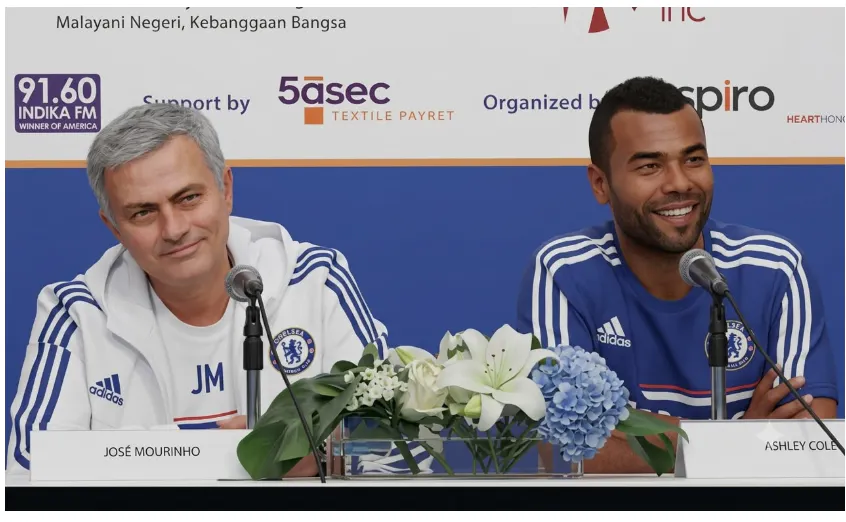
The most famous tapping up case in Premier League history was in 2005. Ashley Cole was an Arsenal left-back under contract when he met Chelsea manager Jose Mourinho and Chelsea chief executive Peter Kenyon at a hotel in London. Cole's agent Jonathan Barnett was also present.
The Premier League launched a full investigation. The outcome: Chelsea were fined £300,000 and given a suspended three-point deduction. Mourinho was fined £200,000, later reduced on appeal. The player was fined £100,000.
It was the last time a senior tapping up case produced a punishment that actually stung. And even then, Chelsea signed Cole the following summer anyway. The fine was the cost of doing business.
In 2016, Liverpool were found guilty of approaching an 11-year-old Stoke City academy player. They flew the boy's family to Anfield on an all-expenses trip, maintained regular contact, and never got written consent from Stoke. The punishment was a £100,000 fine and a two-year ban on signing academy players from English clubs.
Manchester City received the same ban plus a £300,000 fine for a similar breach the following month. Modern tapping up rarely involves a manager sitting in a hotel with a player. That is the 2005 version. The current version is more considered, and almost impossible to prove.
Sportsbuzzfeed takes you through how it works in practice.
A buying club identifies a target. Rather than approach the selling club, which would leave a paper trail and risk immediate rejection, they work through an agent or a third party close to the player. It is that intermediary that speaks to the player's representative or the player himself.
Interest is expressed. Terms are floated. The player learns that a bigger club wants him and what they are prepared to offer. Then, and this is the part that makes the rules almost unenforceable, the story leaks.
It does not leak as a confirmed transfer. It leaks as "interest" or "links" or a report that a club is "monitoring" a player's situation. Transfer journalists pick it up, report it, and the story enters the public domain.
The selling club is now aware that their player is wanted and that the player probably knows about it too. They have been put under pressure without anyone doing anything that can be directly traced back to a club.
It is openly understood by everyone in the industry. Fabrizio Romano, the most followed transfer journalist in the world, has been accused by multiple journalists and club officials of being used by agents and clubs to push stories that serve their interests. A Danish journalist, Troels Bager Thogersen, was direct about it.
"He often goes on errands for agents and gets his information from there," the Dane said.
Copenhagen confirmed they were approached by Romano's company with an offer to promote a transfer story for a fee. Norwegian club Valerenga confirmed the same. Romano has not been found guilty of anything. He is not breaking any law. The agents feeding him are the ones operating in the grey area. And more importantly, none of that is currently a Premier League offence you can prove.
The Guimaraes situation
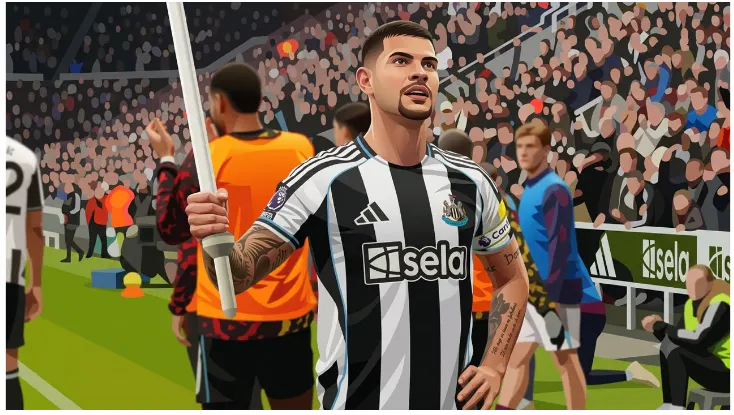
Obviously, Arsenal have signaled their interest and the rough shape of what they might offer. That has reached the press. Guimaraes himself has now told Newcastle he wants to leave. His agents, notably the same agency that recently handled Andrey Santos's move from Chelsea to Manchester United, are in the background.
The story is live, Newcastle are under pressure, and Arsenal have done nothing that breaks what is on paper.
The spirit of the rule is the idea that a club should not be maneuvered into a negotiation they never agreed to enter, has been broken completely.
Newcastle are now in the position West Ham were in with Declan Rice in 2023 and Southampton were in with Virgil van Dijk in 2018. Before Liverpool's record £75 million bid for Van Dijk was lodged, Southampton were so confident an illegal approach had been made that they threatened Premier League action.
Liverpool issued a formal apology. No punishment followed. Van Dijk joined Liverpool six months later.
With Rice, West Ham's chairman David Sullivan told the press publicly that the club had "promised him he could go" after the Europa Conference League final. That statement told everyone that conversations about Rice's future had been happening inside the club long before any official approach.
Brighton made similar noises about Chelsea unsettling Moises Caicedo through informal contact in 2023. No formal charge was made in either case. Both players moved.
Why enforcement is hard
There are two reasons the Premier League has not been able to keep up. The first is proof. Without a recording, an email chain, or a whistleblower willing to go on record, it is almost impossible to demonstrate that an illegal approach was made. The Ashley Cole case only became provable because the hotel meeting became public knowledge through a journalist. Most modern approaches leave no such trail. They happen in conversations, through representatives, across channels the Premier League has no access to.
The second reason is appetite. Premier League clubs are the ones voting on rule changes and enforcement priorities. A large number of them benefit from the current system. Buying clubs use intermediaries to do their groundwork.
Selling clubs use the same system when they are chasing someone else's player. A rule with real teeth would constrain everyone. So the momentum to actually fix it never quite comes.
WHAT YOU SHOULD READ NEXT

The Prestianni Law explained: World Cup 2026 mouth-covering rule
Piero Hincapie is the latest player sent off for covering his mouth at the 2026 World Cup. Here is what the Prestianni Law is and why it exists.

France's new Ligue 3 explained: What it is, how it works and why it matters
France's Championnat National becomes Ligue 3 from the 2026-27 season, making it the country's first fully professional third-tier league. Here is a full explainer on the format, governance, broadcast deal, salary cap and what changes for clubs below.

Vinicius Junior vs Kylian Mbappe: who is the best winger in the world right now?
Mbappe has 24 La Liga goals this season. Vinicius has 16 goals and 9 assists. Both play for Real Madrid, both play on the left, and both have a case. Here is a full breakdown of who wins the best winger debate in 2025-26.

The Haaland question: Does a striker need more than goals?
Haaland’s scoring brilliance is undisputed, but modern football demands more. Can City’s striker impact the team beyond the box?
Comments (0)
Latest Posts

Kane, Haaland and Osimhen: What Makes a Striker the Best in the World?

Eberechi Eze Stats and Biography: Progress or Regression?

Manchester City 115 Charges Ruling: 3 Reasons They May Not Be Punished As You Expect

The Complete Midfielder - Who Is the Best Right Now?

Lamine Yamal vs Raphinha: Who Is the Better Player at Barcelona?

Goals, Trophies and Loyalty: Inside the World of Lionel Messi
🔥 Most Read
- 1FIFA World Cup 2026 Prize Money: How Much Spain, Every Team, and Player Won
- 2Possession football is ruining the excitement of the sport
- 3Mo Salah, Trabzonspor and the Turkish Super Lig: Everything You Need to Know
- 4Everything to Know About Christos Tzolis, Arsenal’s Premier League Debutant
- 5Real Madrid, Arsenal & Vinicius Jr: How Image Rights Work in Football
More from this Author

Lamine Yamal Childhood in the Spotlight: Inside a Modern Prodigy’s Rise

AFCON 2027 Qualifiers: Diomande, Ghana and 5 Reasons You Should Watch This Year’s Edition

Max Dowman, England and the price of being ready too early

Never Change a Winning Team: Arsenal, Arteta and a Lesson Relearned the Hard Way

Alidu Seidu, Nice and the Joker Rule: How Ligue 1 Lets Clubs Sign Players After the Window Closes

